
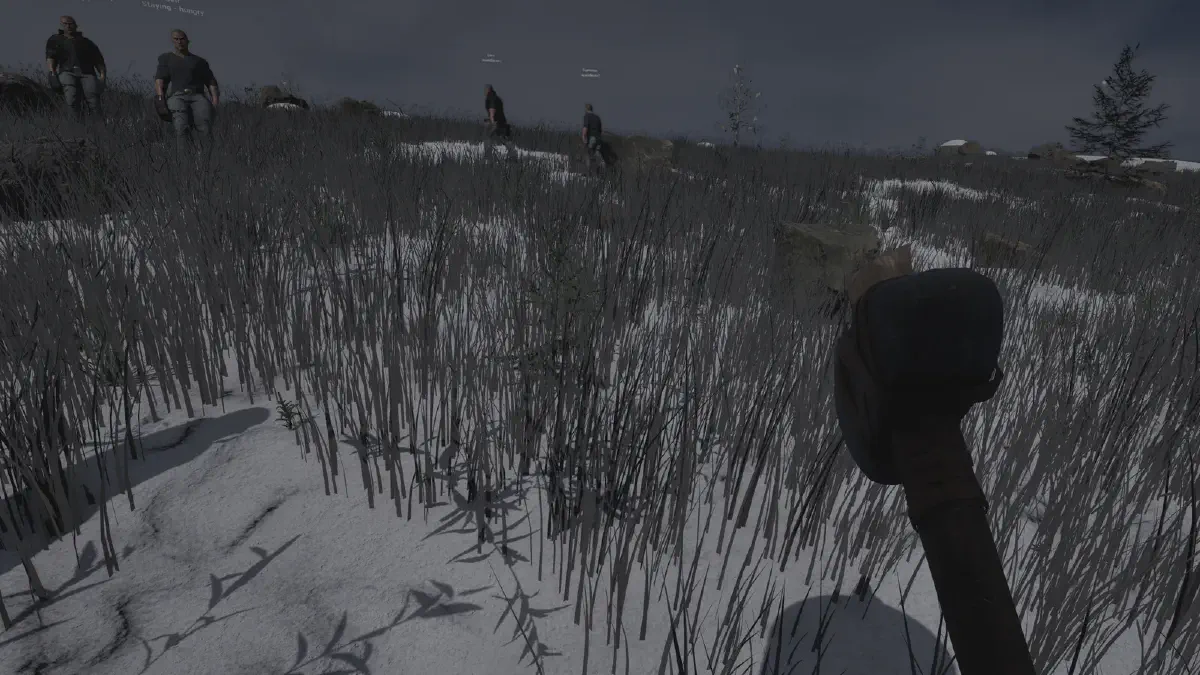

This was a big one. In two days the game went from “a beautiful world you walk through” to “a world that tries to kill you before winter”. Most of it still runs on placeholder art, but the systems underneath are real.
Animation, Written in Code#
Characters in Unreal are usually animated with visual Animation Blueprints. YUMA now does all of it in C++: walking, running and sprinting blend smoothly by speed and direction, steps stay in sync with the feet, feet stick to slopes, and every villager gets their own body proportions, from tall and lanky to short and broad. Actions like chopping, attacking or taking a hit play from a timing table, which also tells the server exactly when a swing can land. That matters for multiplayer, where the server has the final word.
Combat, Version One#
Combat is modelled on the feel of Valheim: light combos, a heavy attack, blocking with stamina, a parry window if you raise your guard at the last moment, and a dodge roll that lets you slip through a bite. Wolves circle and take turns lunging, bears hit hard, boars charge straight through you, while deer and elk just run. Villagers on guard duty fight alongside you and fall back when they are hurt.
The animals are still grey and brown placeholder shapes, so there are no combat screenshots yet. Real models and animations are next on the list.
Cold, Wet and Hungry#
The north is cold. Your body warmth now depends on the air, the wind, the season and the time of day, and on being wet: rain, snow and a swim through a lake soak your clothes, and wet clothes keep you much colder. A fire helps, a roof helps more, and a hut with a hearth keeps you warm through a January night. Hides from your hunts become tunics and cloaks.
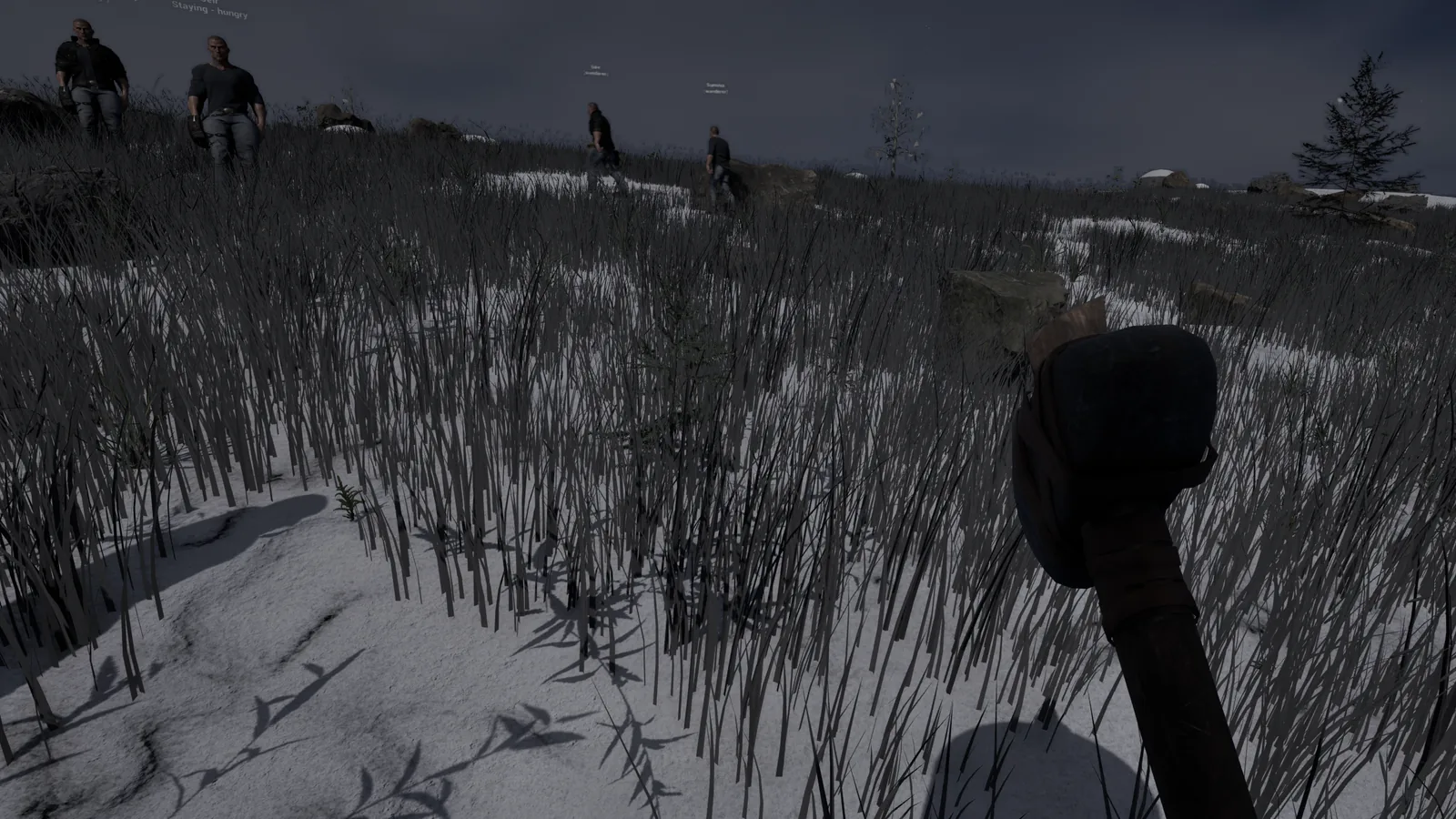
Food spoils now, slowly in winter and fast in summer. Meat can be cooked at the fire or dried on a rack so it lasts the winter, berries and mushrooms only grow in their season, and your villagers eat from the camp stores, oldest food first.
A Valley Worth Starting In#
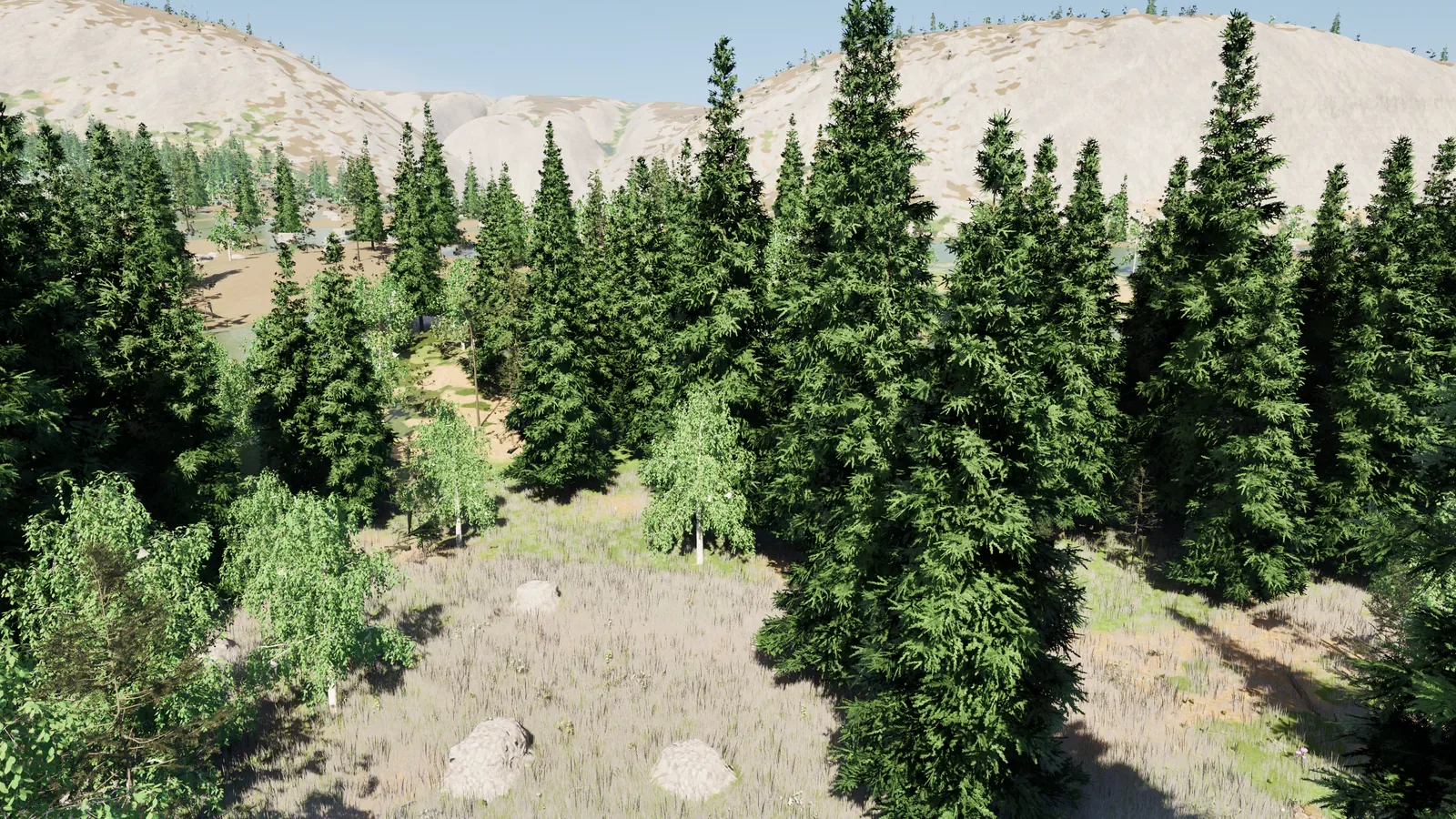
The new start at a lake in a forested valley had an ugly secret: the ground was mostly grey gravel. The world generator remembers how much rock fell from the valley sides over thousands of years, and the ground material treated all of that ancient debris as if it were lying on the surface today. Now it only shows on slopes and where little grows, and the valley floor is moss, grass and forest floor again.
The First Winter#
All of this comes together in the first playable hour. A small saga journal guides you: gather stones and sticks, make an axe, light a fire, mark out a hut, take in a wanderer who comes out of the woods to your fire, hunt, survive the night the wolves come, make warm clothes, store food, and then the first snow falls. Each step completes from what you actually do in the world, never from a script. The season runs a little faster in this first hour, so winter arrives after about 75 minutes.
What’s Next#
Playtesting the first winter, real models and animations for people and animals, and iron: digging bog iron from the moors, burning charcoal and smelting it in a bloomery, just as the Vikings did.