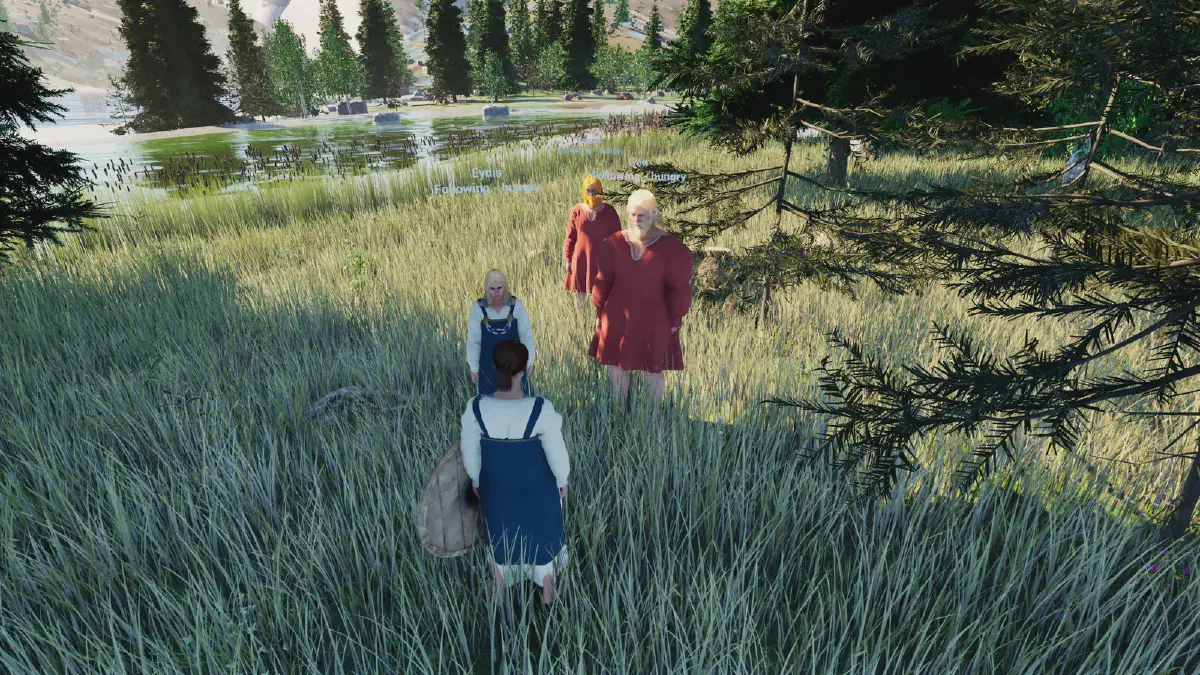

The second big push of the day. The people of YUMA finally have faces, you can see where you have been, and the land starts to feed you.
Faces of the North#
Until today every person in YUMA wore the same borrowed placeholder body. That is over. There are now six Viking men and shield-maidens, each with their own face, hair and build, and they are used for you and for everyone who follows you. Your look comes with your character, so other players on a server see you the way you see yourself, and every follower who joins your band gets a look of their own that matches their name.
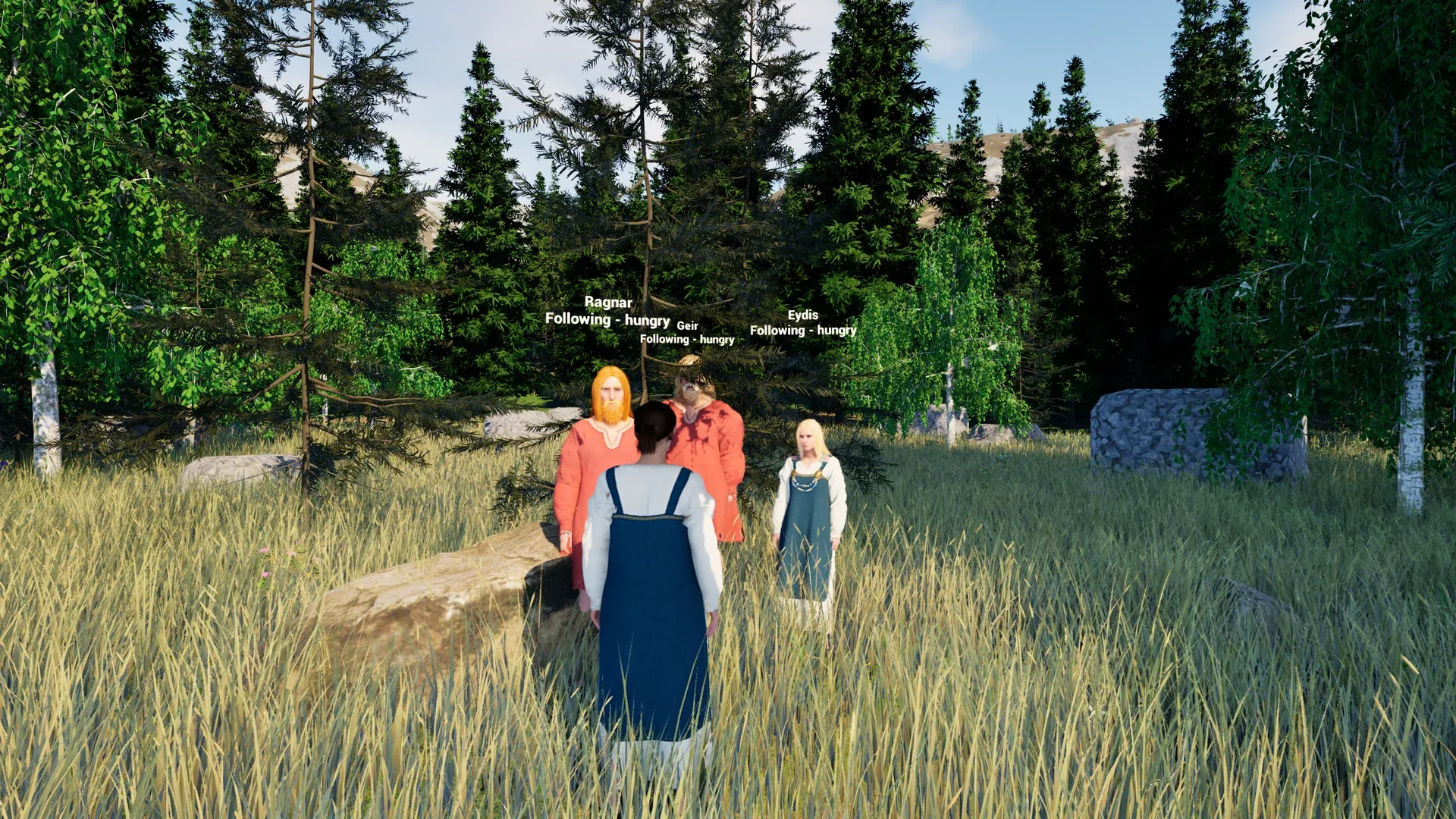
They also got dressed. The men wear a wool tunic with a woven band at the collar and cuffs, the women a linen underdress under a woad blue apron dress held by oval brooches, the way finds from Hedeby and Birka show it. A round shield after the Gokstad shields hangs on the arm. Every garment is fitted to every body by its own small pipeline.
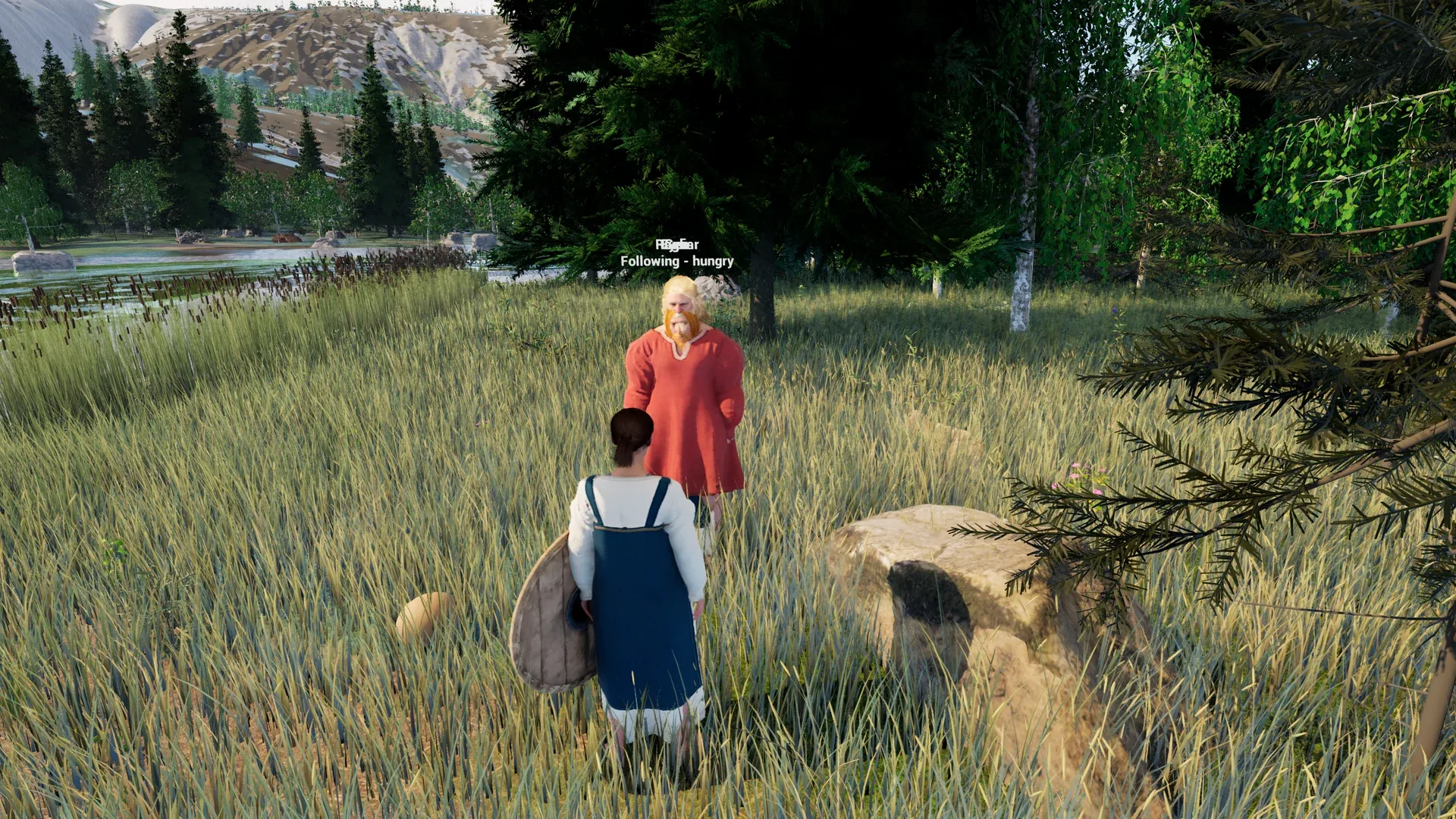
The animations are still a borrowed set retargeted onto the new bodies, and the clothing is a first pass. But for the first time the camp feels like it belongs to people.
A Map That Fills In#
Press M and a parchment map unfolds. It is drawn from the same world data the terrain grows from: shaded mountains, contour lines, coasts in ink, rivers, lakes, forests and bogs in muted colours. At first almost all of it is blank. The fog of war only lifts around you as you travel, and from a summit you see much farther than from a valley floor.
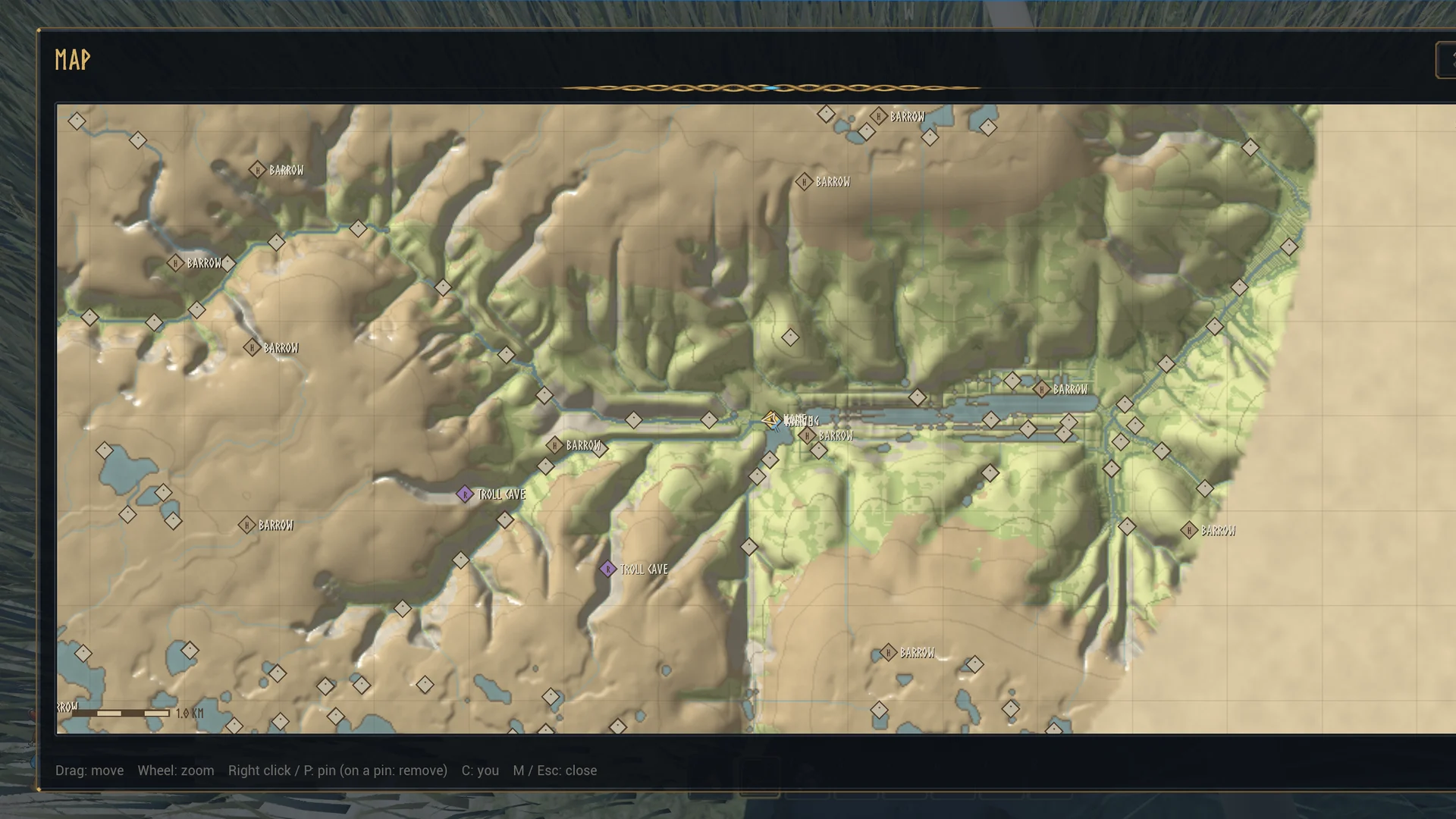
What you find stays on it: barrows, troll caves, clan villages, landmarks, your camp and your boats, plus your own pins with names. If you die, the map shows where your belongings lie. A compass bar at the top of the screen points to everything you have marked. On a server everyone has their own map, and a village can choose to share one.
The First Fields#
The food chain grew a lot longer. A wooden hoe turns meadow into tilled soil, and five crops can be sown in their season: barley, rye, flax, turnips and cabbage. They grow with the real calendar and weather of the world: slowly in a cold spring, faster in a warm summer, and a hard frost or a drought can ruin a field. Winter rye has to go into the ground in late summer and wait under the snow. At harvest you get the crop and seed for next year, and the soil slowly tires if you never let it rest.
Grain goes to a quern, flour goes to the fire, and you get bread, the first food in YUMA that takes a whole season to make.
Fishing#
A simple rod, a cast into a lake, a river or the sea, and then patience. When the float dips you have a moment to strike. What bites depends on the water, the season and the hour: char and trout in cold lakes, perch and pike in the warmer ones, salmon running up the rivers in late summer, cod and herring at sea. Fish spoil fast, so cook or dry them.
The Barrows Wake#
Since the last devlog the mythic side of the north has begun. Grave mounds stand on ridges and coastal heights, and when you come near, their stone chambers open into the hillside. Step inside and the draugr rise from the dark. The largest mound near your start holds the barrow king. He calls his thanes when he weakens and makes the ground shake, and his crown is the key to the forge.
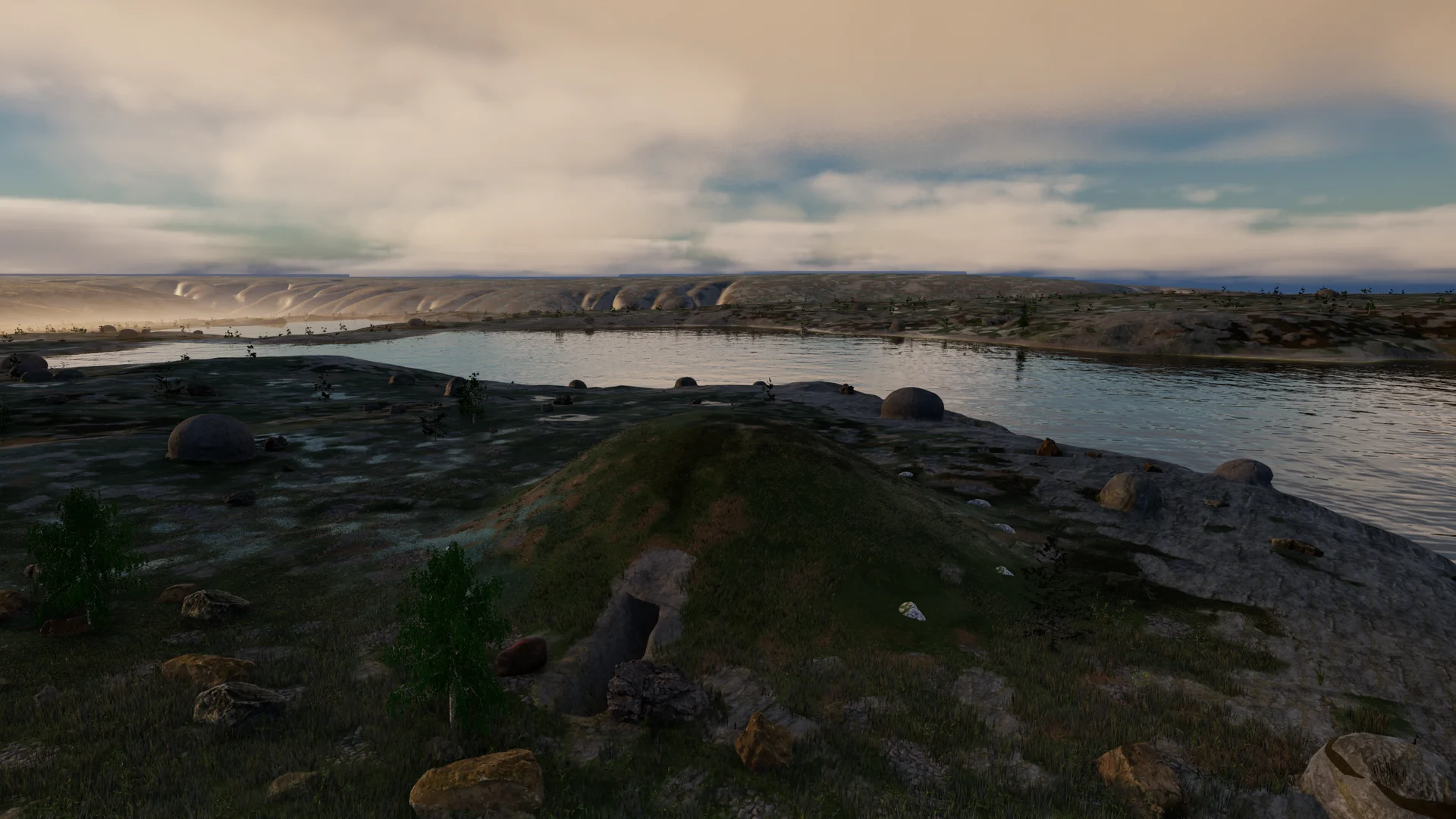
The first mounds were a little too round and too perfect. Tonight they became worn, uneven domes that settle into the slope, with the ground’s own turf on them and old stones breaking through.
Also New#
- Skills by doing: woodcutting, mining, building, cooking, every weapon and more improve as you use them, and great deeds earn renown and titles that the clans respect.
- A calmer wind: the grass no longer jumps when the wind changes, and the picture got a little more colour and depth.
What’s Next#
Sagas: journeys that the clans, the rune stones and the seers send you on, with a proper talk and trade screen. Bows and hunting. Snow on roofs, trees and rocks for the first winter.