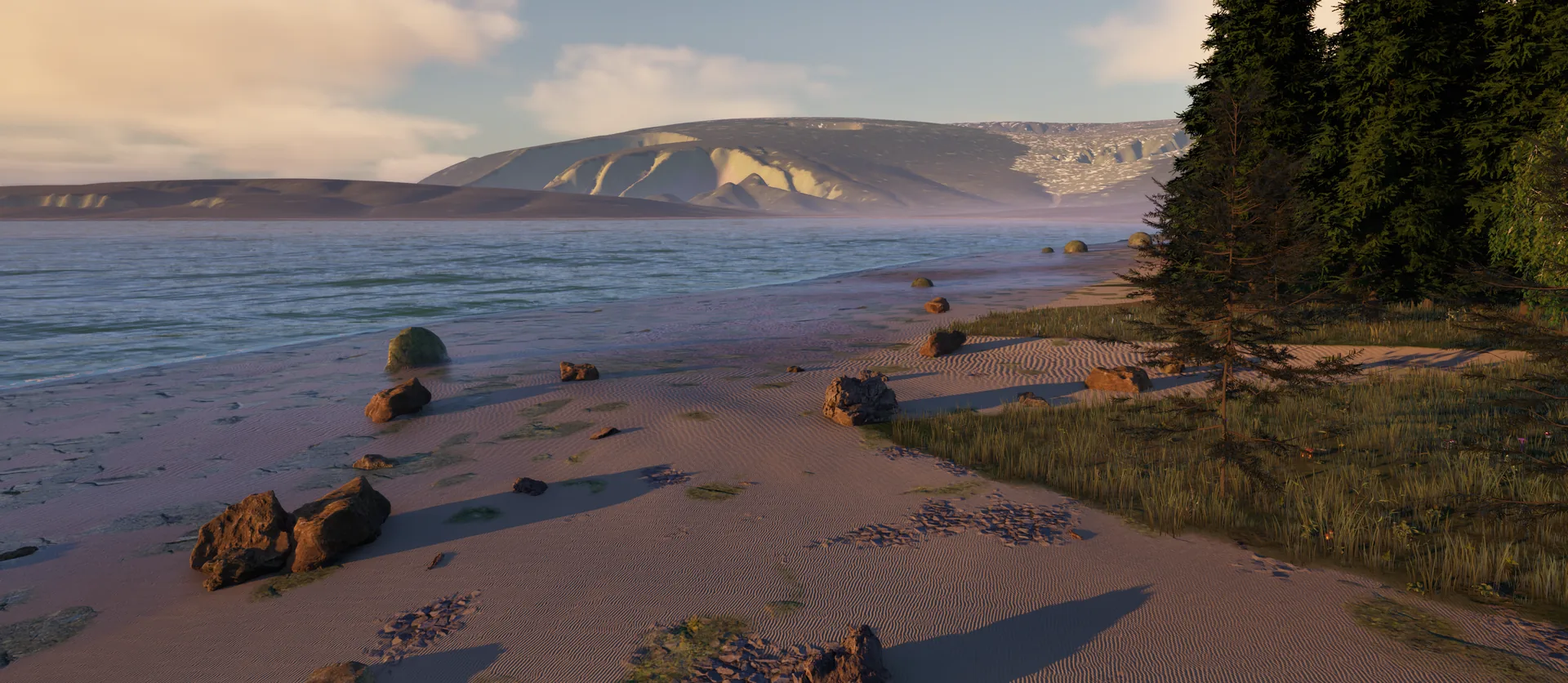
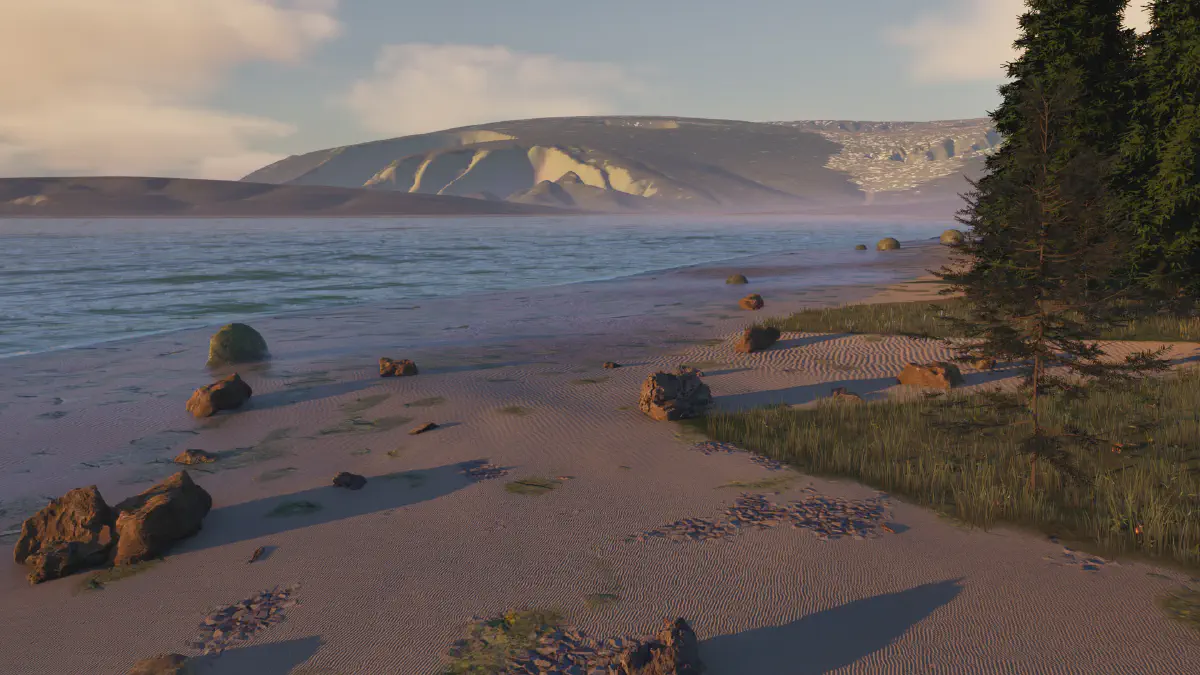

This one is all about light and air. The world of YUMA had everything in place, but it never felt like a place you would want to sit down in. The colours were strong, the shadows were hard, the sky was a deep, empty blue, and somehow everything looked a little like plastic. It turned out there were a few very concrete reasons for that.
The Sky Was 15 Kilometres Up#
The world in YUMA is flat, but the sky is drawn as if it hung over a round planet, because that is what makes sunsets, haze and the colour of the horizon look right. That planet had its top exactly in the middle of the map. A few days ago the start moved to a fjord coast about 430 km from that middle, and on a round planet 430 km is a long way down the curve. The sky thought you were standing almost 15 km high.
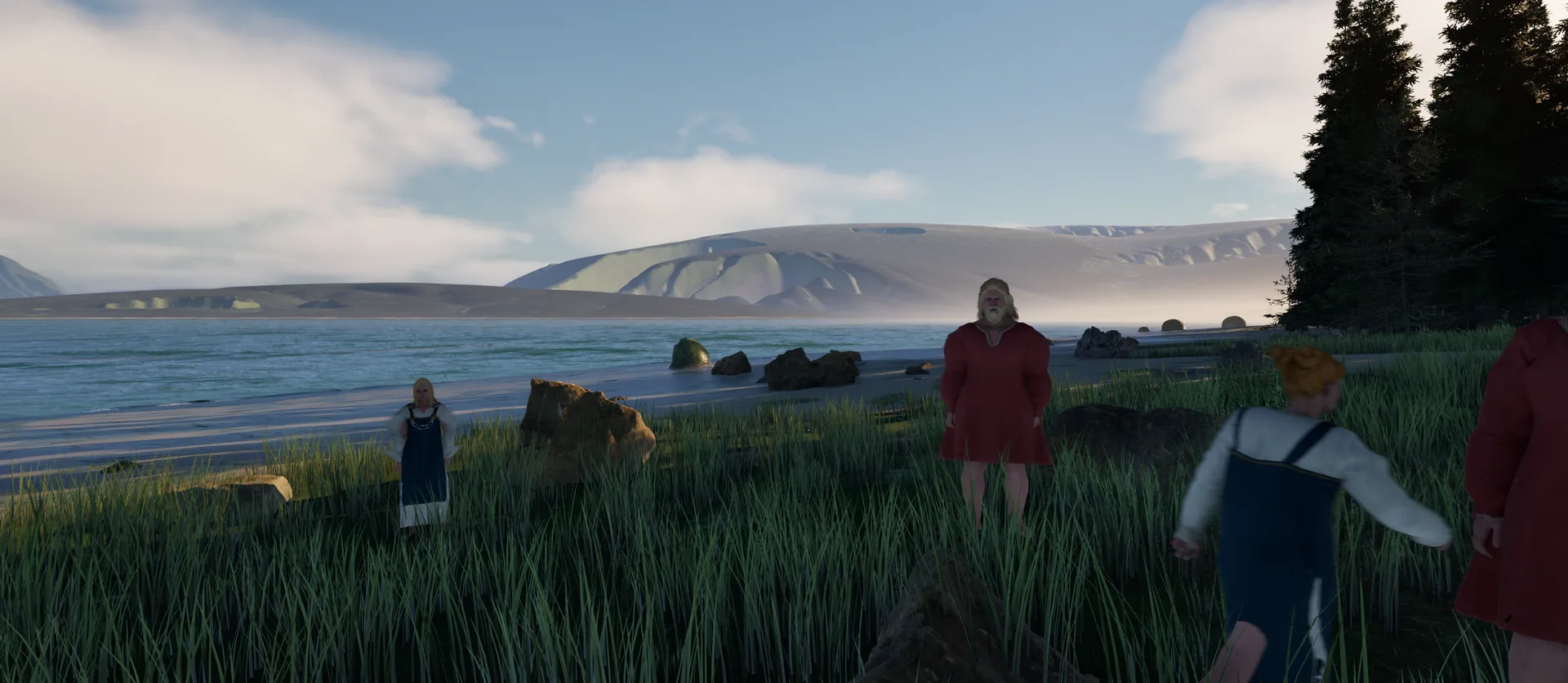
At that height the air above you is thin: the sky turns dark navy, distant mountains lose their haze, and the clouds float far below your feet, inside the ground, where you never see them. Now the planet simply moves along under you.
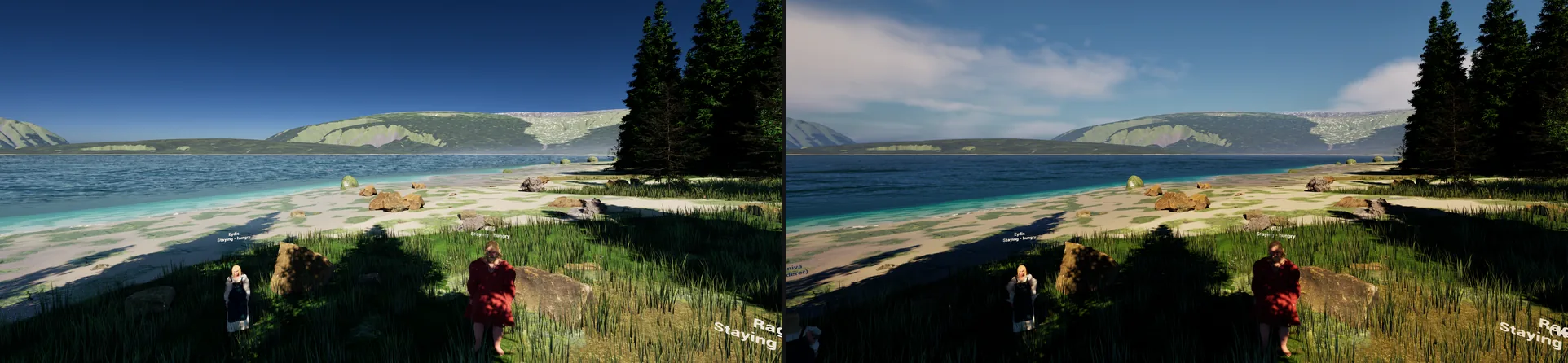
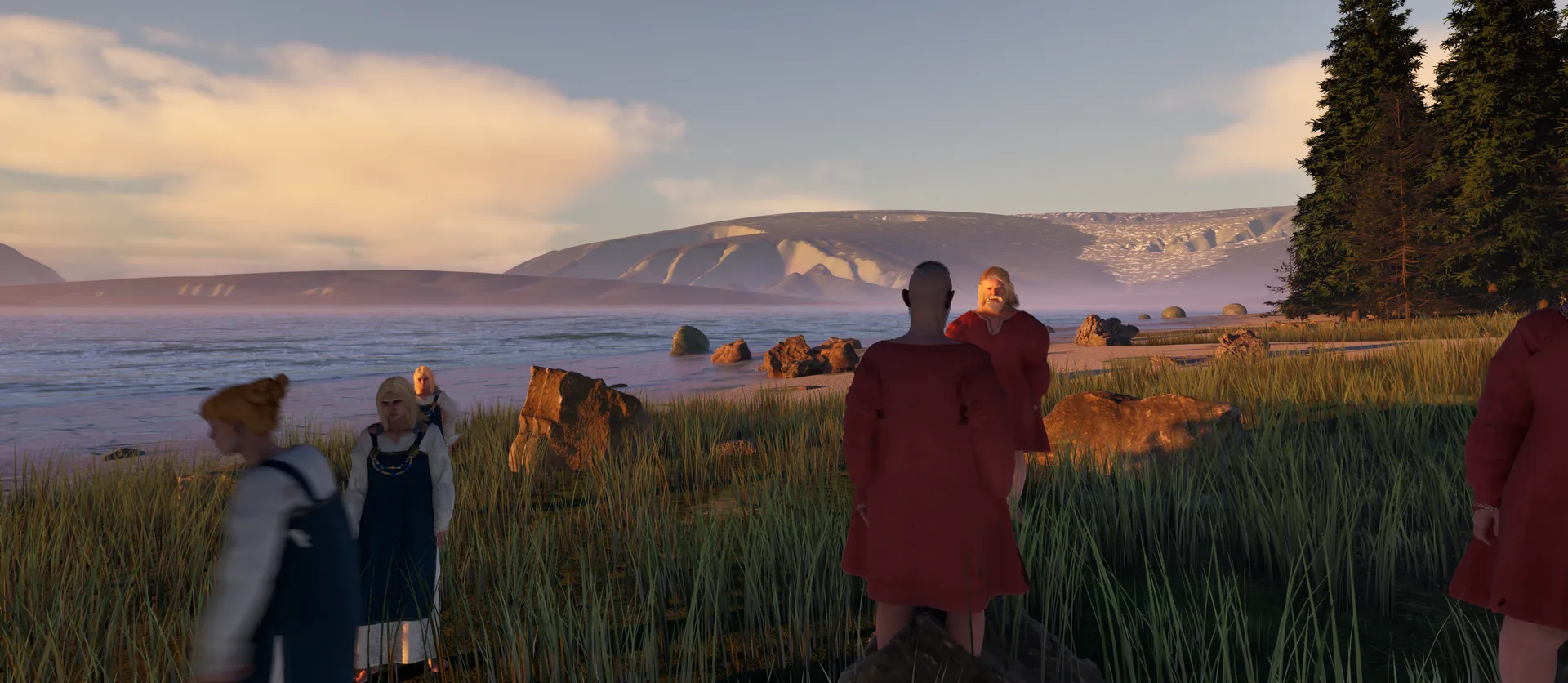
Left before, right after. Same beach, same hour. The sky is pale towards the horizon again, the far shore sits in a soft haze, and there are clouds, with their shadows drifting over the land.
Meadows That Shone Like Plastic#
The second culprit was in the ground itself. Every surface has a value for how rough it is, and the scanned meadow texture said “polished”: about as glossy as a wet plastic bag. At noon you hardly noticed, but with a low sun whole plains of grass and bog lit up white, and grassy mountain sides looked pale and washed out. A few of the rock, moss and needle textures had the same problem, a little less extreme.
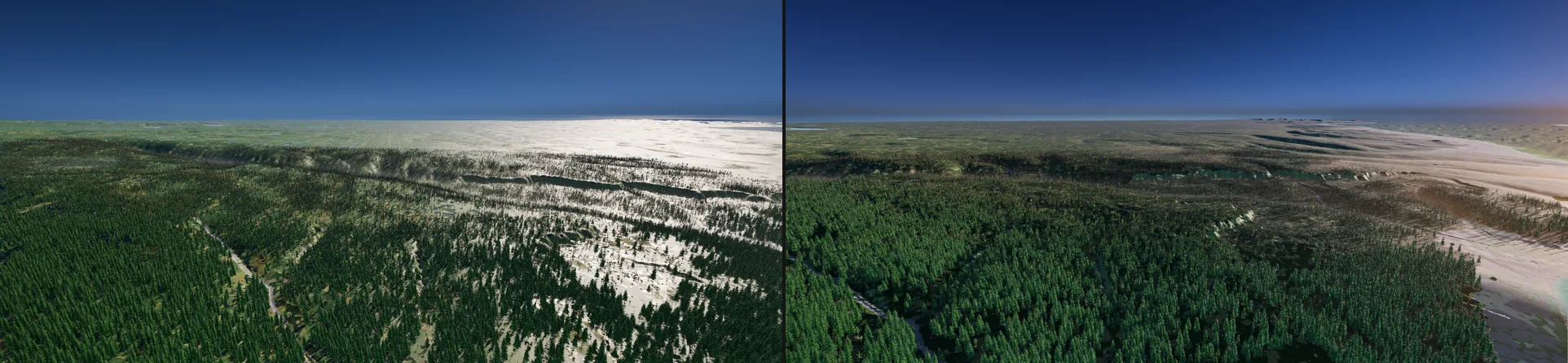
Grass, moss and lichen are now as matt as they really are. The white plains are green again.
Golden Hours#
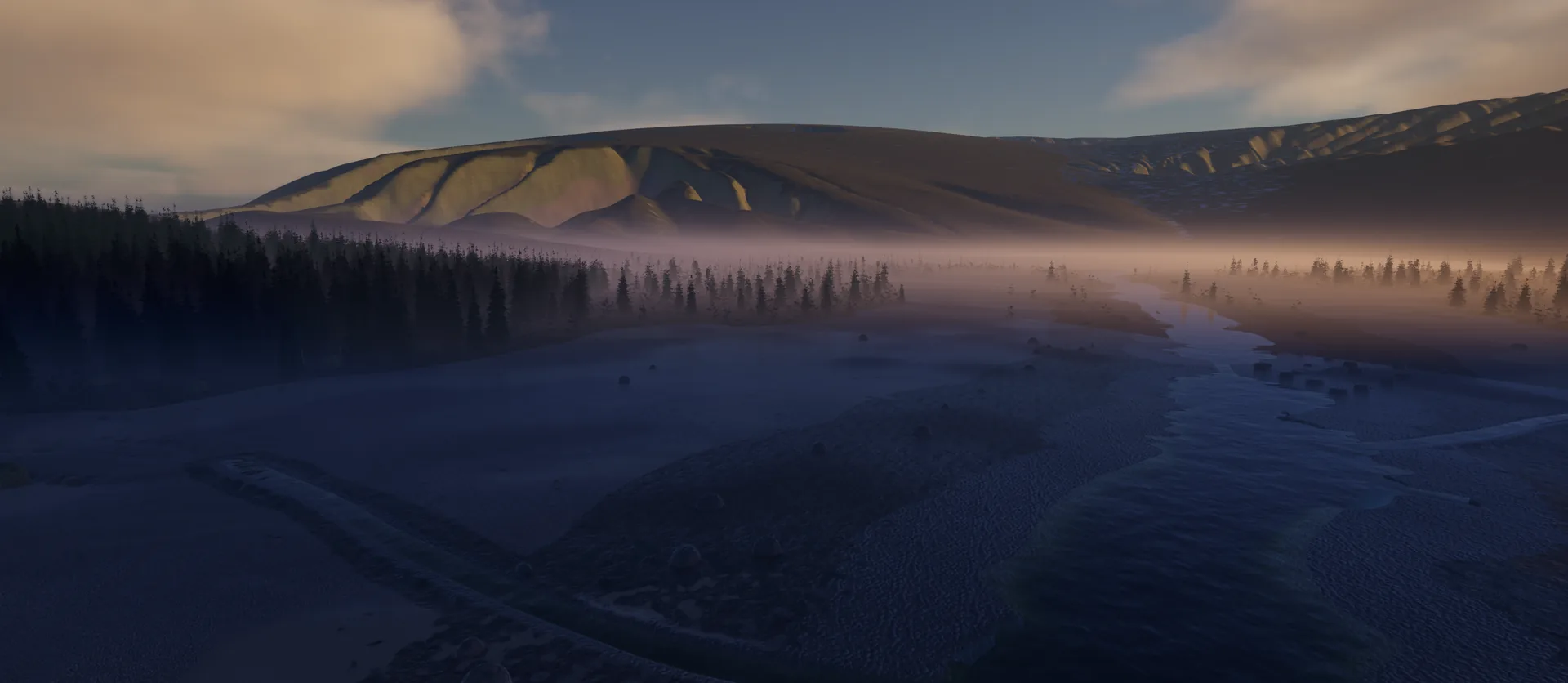
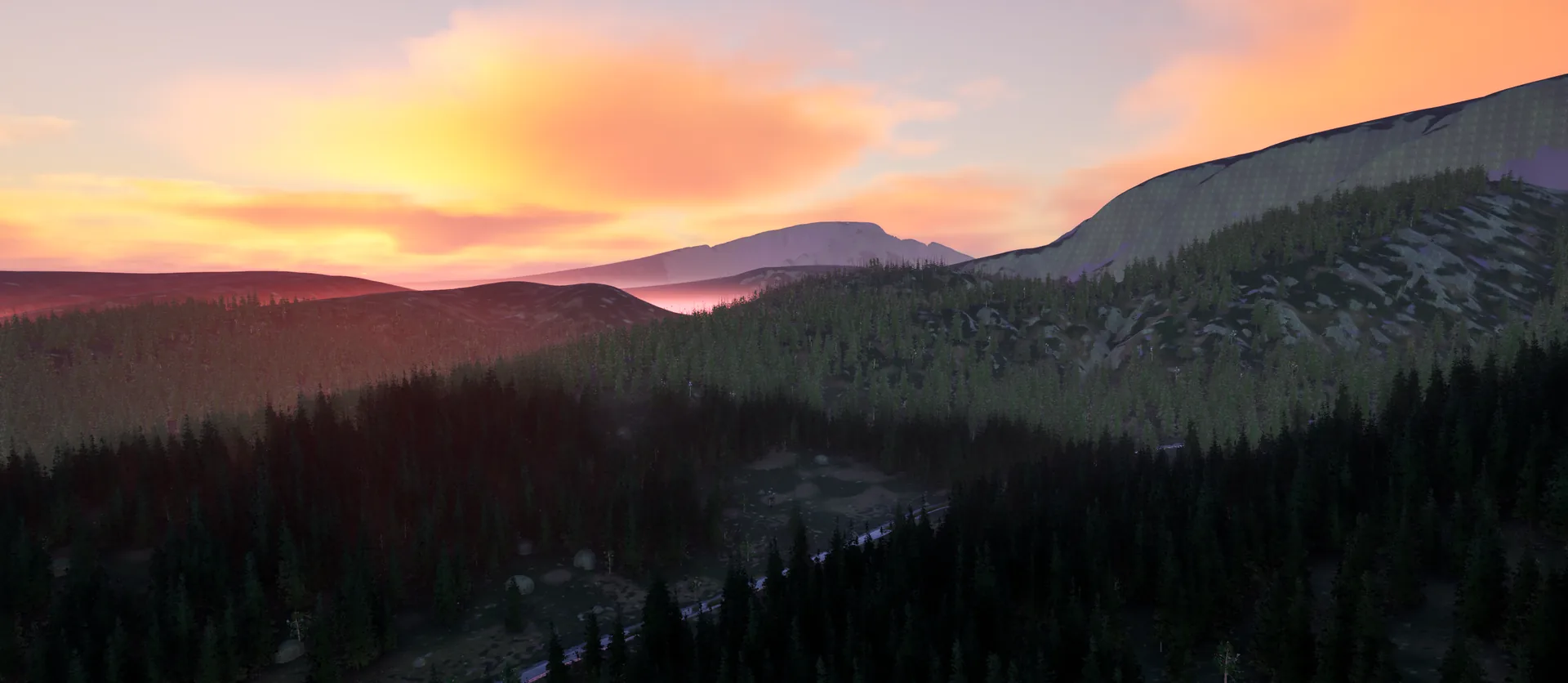
With the sky fixed, the light could be softened as well. The old picture had been tuned against the broken sky and was too hard: dense black shadows, a cold violet tint in the dusk. Now the shadows stay readable, the evening light is warm, and the morning has its mist over the water.
A Forest Down to the Horizon#
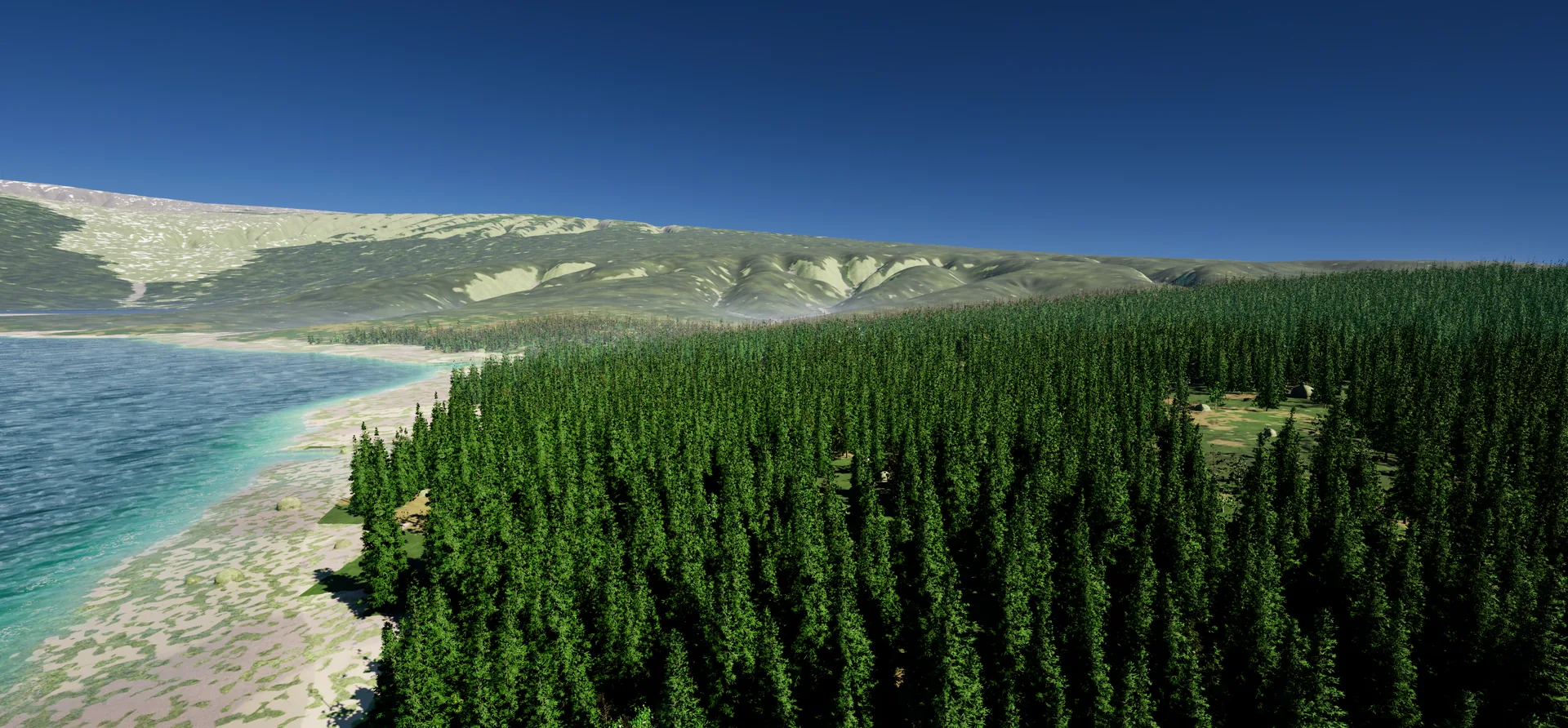
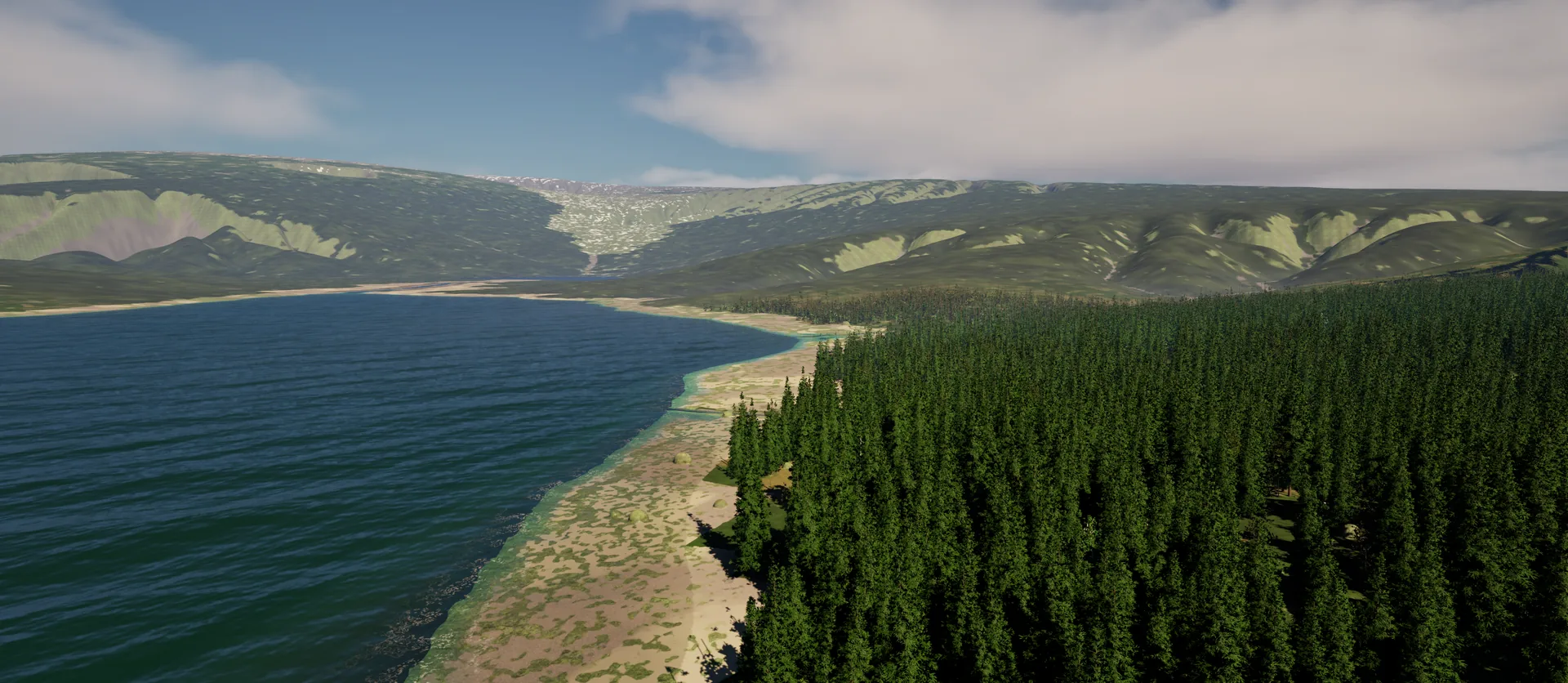
Trees are drawn out to about a kilometre and a half. Beyond that the forest simply stopped, and it stopped along straight lines, because the far terrain is built from square tiles. From any hill you could see the edge of a big square, with bare meadow behind it.
Now the trees thin out on a ragged circle around you, and beyond it the ground itself takes on the colour of the crowns: dark spruce, lighter birch that turns yellow in autumn and grey once the leaves have fallen. From up high the forest now runs on to the horizon.
Also Fixed#
- Beaches without camouflage: green turf no longer sprouts in hard spots all over the sand. The meadow starts behind the beach, along a natural line.
- Rivers with green banks: the banks of every river used to be wide sand flats that looked like roads from the air. Sand now belongs to lakes and the sea; rivers keep their gravel bars and run between grass.
- Softer meadows: grass, heather, moss and forest floor now blend into each other instead of forming hard-edged patches.
- Mist that no longer glows: a mist bank in a valley used to light up like a lamp after sunset. Now it sits there quietly.
- No more steps on the horizon: the distant terrain is built in rings of decreasing detail. Where two rings met there could be a step of a few metres. It is gone now, and the far land is only shown in complete pieces, so you never look at the side of a half-built tile.
Update, Later That Night: Smooth Rivers#
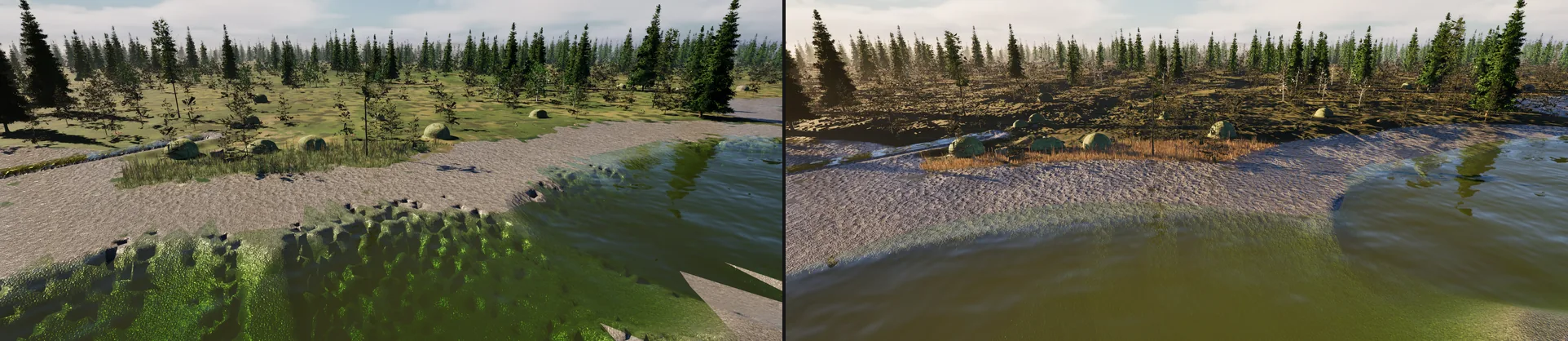
The jagged water edges are fixed too. Up close, the shallow parts of every river had a bed full of lumps and little pits, and where they poked through the water the shore turned into a row of saw teeth. The culprit was once again the distance from the middle of the map: the gentle bends and pools of a river are drawn from a noise pattern whose scale followed the river’s width. Four hundred kilometres out, a river that grew just a few percent wider read a completely different part of that pattern, so every few metres the river bed was shaped by a different, unrelated bend. Now the bends come from fixed patterns, and neighbouring stretches of a river agree with each other again.
Small brooks far away also read as dark, wet streams now instead of pale gravel paths.
What’s Next#
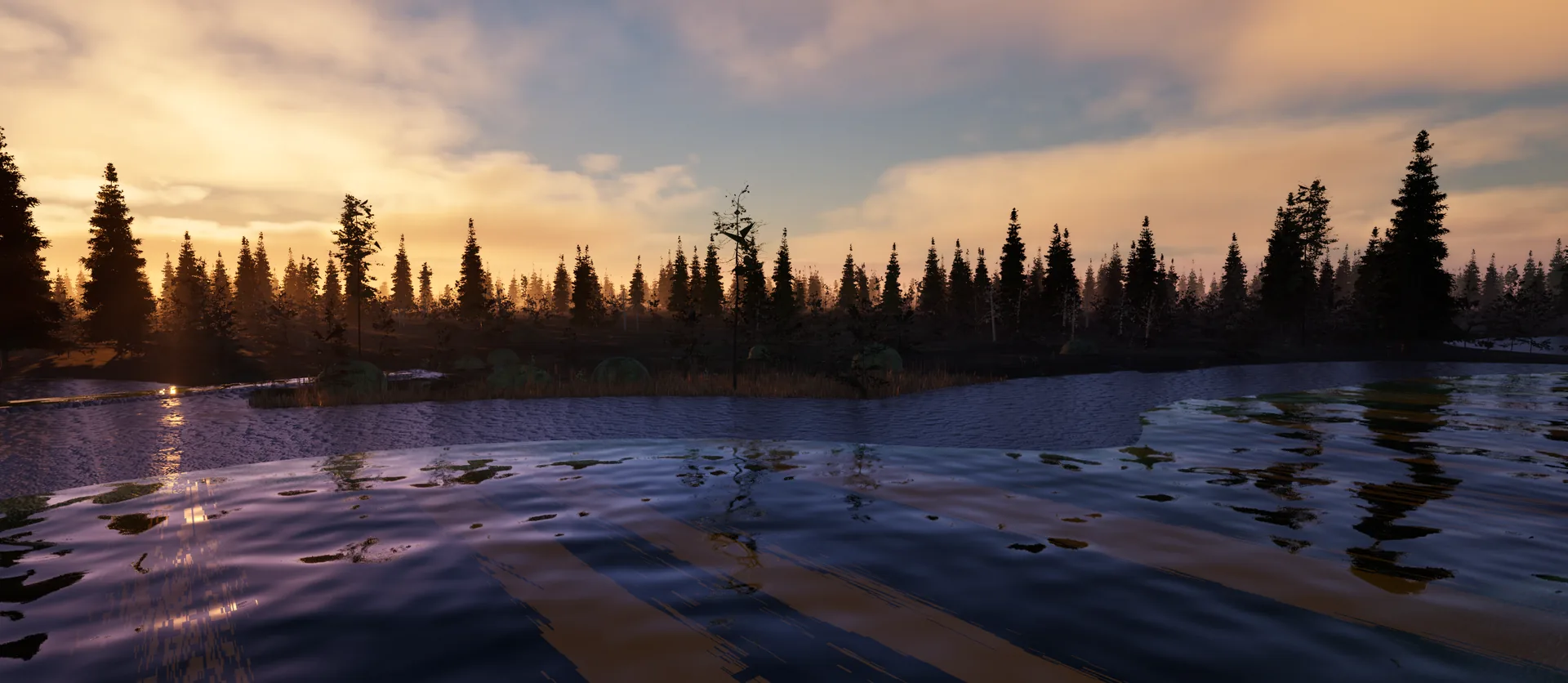
Next up is more life in the cosy direction: smoke over the huts, warm light from the doors at night, and a few more evenings like the ones above.