
Devlog #13 • Moonlit Nights, a Faster Sea & New Moves
Nights that read as nights again, northern lights as a rare event instead of a fixture, a sea that costs a quarter of what it did, sharper shadows for less, new sword, farming and chopping animations, and villagers who stay off the roofs.
The weekend brought a long list of polish: a new camera, a reworked HUD, firelight in physical units, crafted furniture for the huts, a storm with sheet lightning. Today was about going through all of it in the running game, keeping what works and fixing what did not.
Nights That Read as Nights
The night had two faces. Load a save at midnight and the world looked like an overcast afternoon for half a minute; stand still long enough and it sank into pitch black. Both came from the same place: the eye adaptation. The camera adapts to darkness at about one stop per second, so after loading, a teleport or a jump of the clock it started from daylight and slowly sank. On top of that, the moon had been dimmed so far that once the eye had adapted, there was nothing left to see.
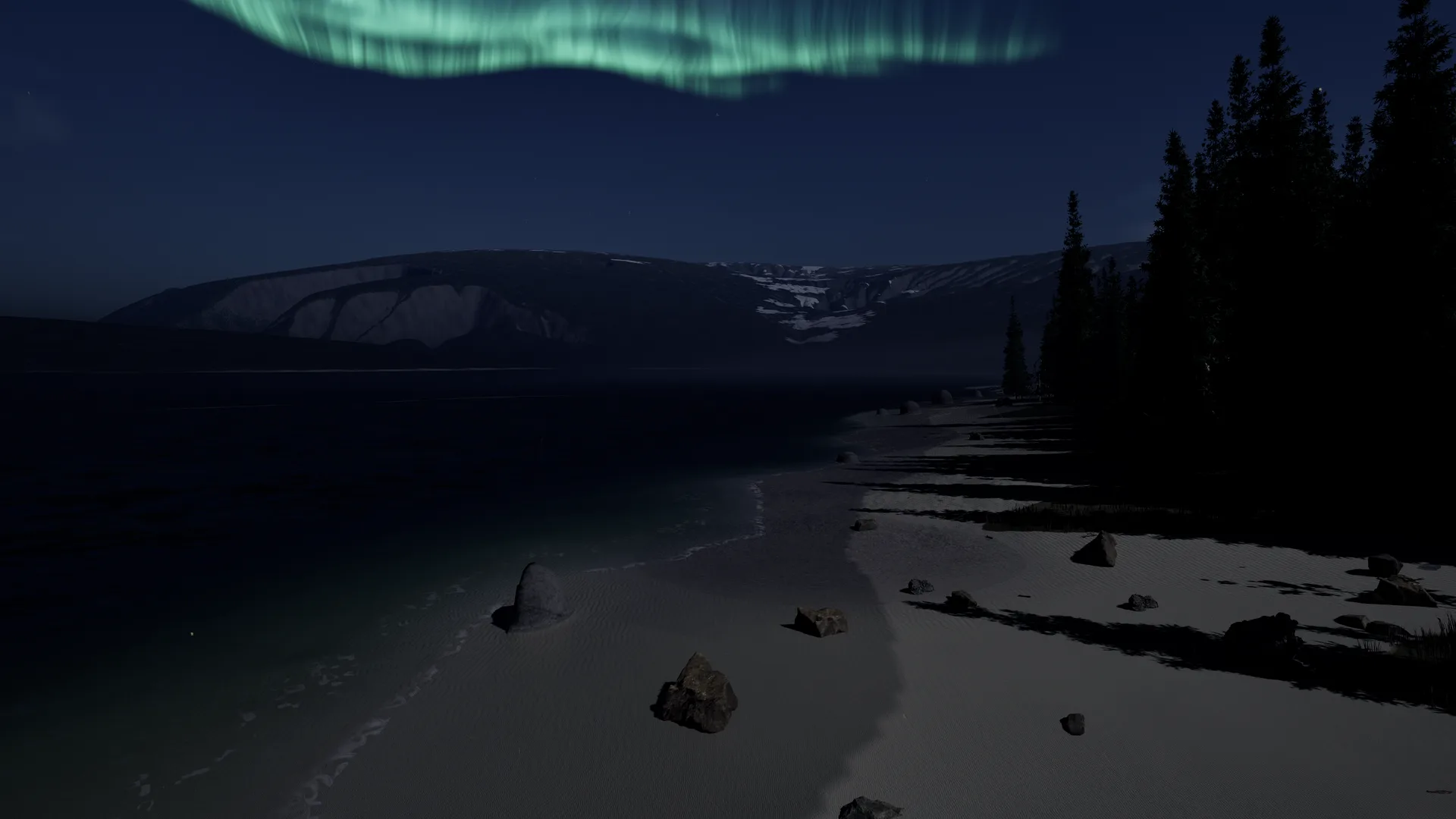
The exposure now settles within a few seconds after a load, a teleport or a change of the clock, and the moon is bright enough to silhouette the mountains and read the shoreline, while the forest stays dark. Under the trees you want a torch, and the torch now burns at its tip instead of somewhere near your head.
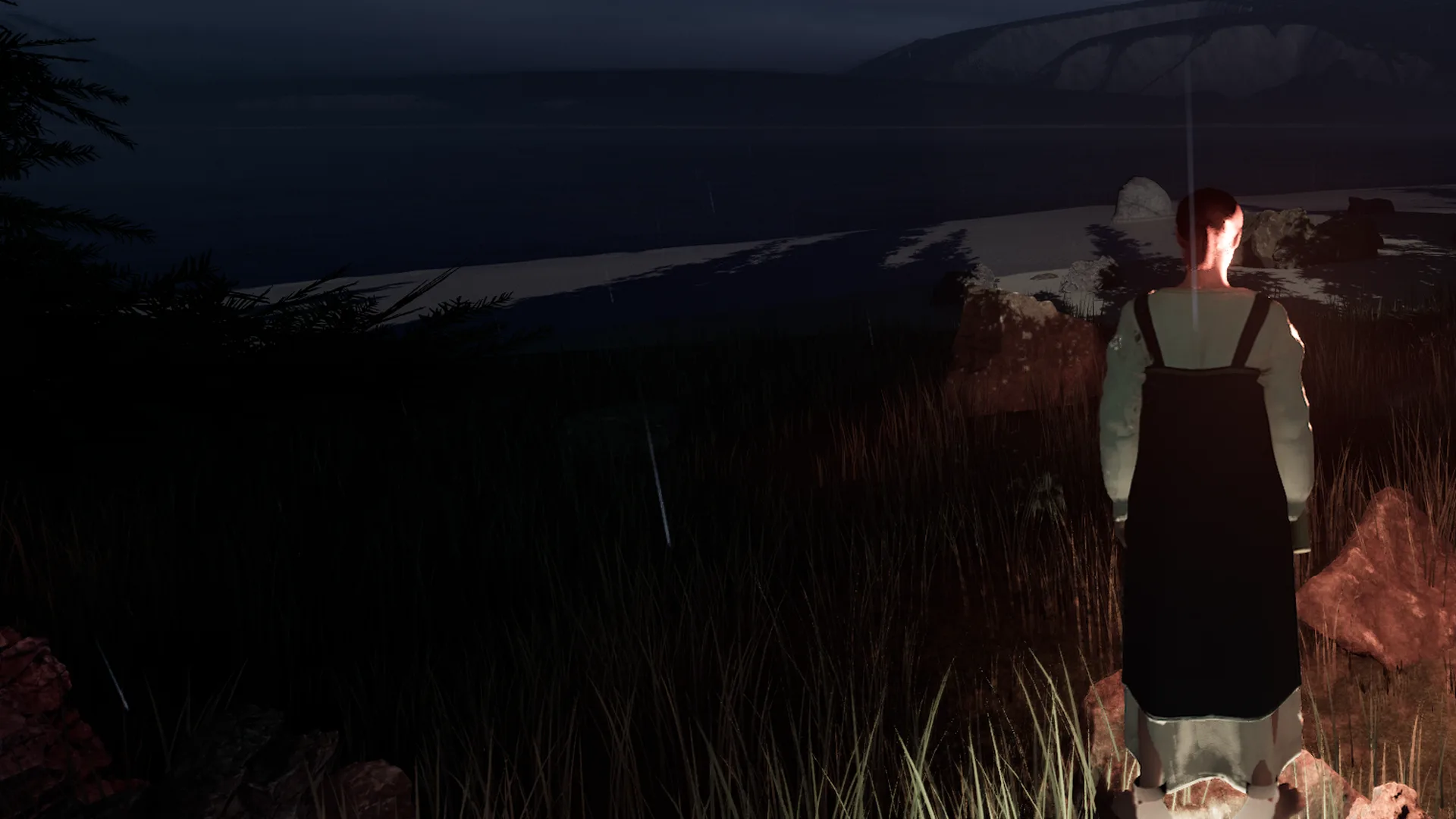
The northern lights are an event now. Each night rolls its own activity: about half of the clear nights stay dark, a third show a faint arc low in the north, and roughly one in seven brings a bright display. The curtain also no longer bathes the forest in green: it stays in the sky, where it belongs.
A Faster Sea and Cheaper Shadows
The open sea is a sum of 34 waves that follow a real wind sea spectrum. Until today every pixel of water worked out that spectrum again, almost a hundred times per pixel. The waves only change when the wind does, so the game now computes them once on the CPU (the same model the boats use to bob on the swell) and hands them to the water as a tiny texture. On a view across the fjord the water went from 4.7 to 1.0 milliseconds per frame, and it looks exactly the same.
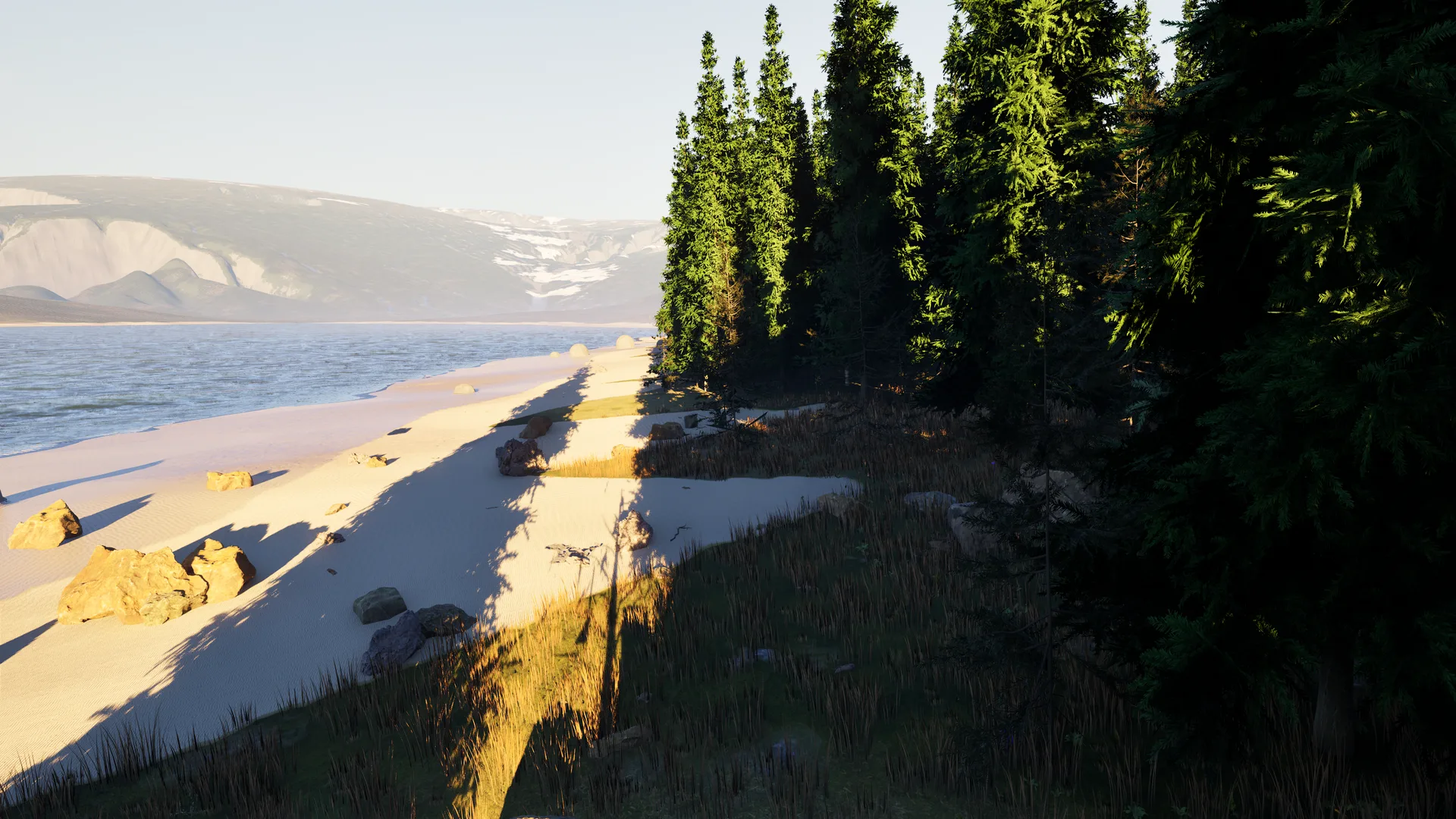
The sun’s shadows were the next big cost in the forest: deciding which parts of the shadow map the camera can see took six milliseconds among the tree crowns. Testing every fourth pixel instead of every second one costs a little over one millisecond, with no visible difference in the shadows. And a memory setting for ray tracing turned out to overflow inside the engine, which made it throw away and rebuild geometry every frame. That one is fixed too.
New Moves
The Vikings now move with clips from Quaternius’ Universal Animation Library (CC0): three sword combos and a heavy strike, a block, a roll, chopping, sowing and harvesting, eating and kneeling repairs, retargeted onto the Viking bodies. The library had been in the project before, but at a hundredth of its size; it is now imported the way its author intended.
Villagers Stay Off the Roofs
Villagers found a creative way onto the starter hut: the top of a wall is walkable from the side, and from there it is a short stroll along the gable to the ridge. The pathfinding now only treats the top of a building as floor when it is a real platform, so wall tops, gables and railings are no longer paths. Wanderers and villagers also no longer share first names, and the bundle of goods a villager carries home sits on their back instead of floating behind them.
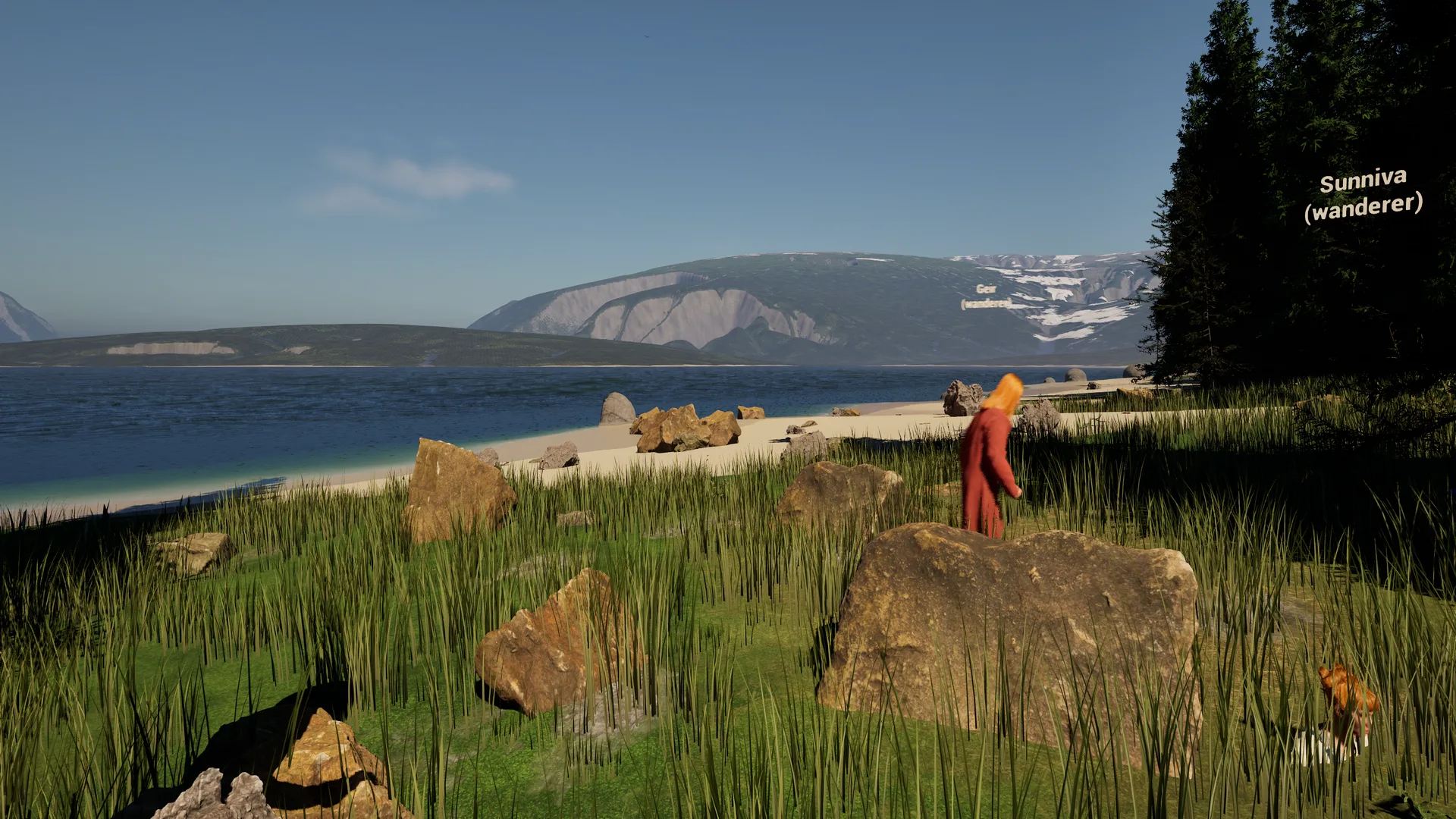
Next up: more frame time for the forests, where the trees themselves are now the biggest cost, and a long playtest of the first winter.